
Overhead Projector
The classroom spotlight machine that turned transparent sheets into presentations and your teacher into a silhouette.
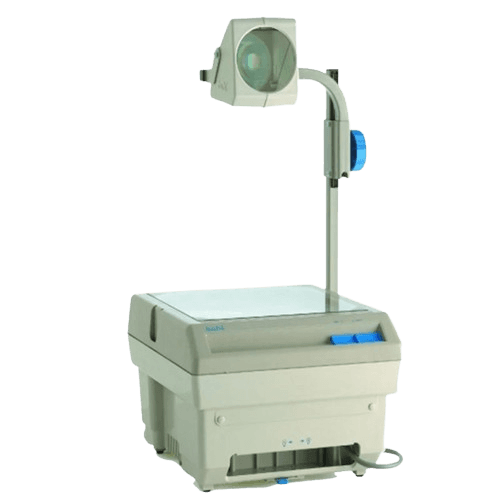
The overhead projector was the humming monarch of classrooms, conference rooms, and church basements everywhere. You slapped a transparency on the glass, switched on the light, and instantly transformed your teacher or boss into a dramatic silhouette with marker fumes and authority issues.
For decades it was analog PowerPoint with a fan inside: simple, bright, and wonderfully clunky. Then digital projectors arrived with laptops and cleaner workflows, and the overhead projector faded into memory along with the smell of warm plastic and educational dread.
Quick Bits
What It Was
An overhead projector shined light through transparent sheets and threw the enlarged image onto a screen or wall for a room full of people to see. It made presentations possible with nothing more exotic than a bulb, a lens, and some transparencies.
Why It Mattered
Teachers and office presenters loved it because you could prepare visual material ahead of time or scribble on it live while pretending that counted as improvisation. It was reliable, readable, and dramatically easier to manage than a lot of earlier projection setups.
Why It Became Obsolete
Once laptops and digital projectors made slides easier to edit, store, and transport, stacks of transparency sheets started feeling very last-century very quickly.
The overhead projector still owns a weird little corner of memory because it made presentations feel physical, clunky, and strangely theatrical in the best possible way.
Why People Remember The Whole Sensory Experience
The overhead projector was never just visual. It came with the hum of the fan, the heat of the lamp, the smell of warm plastic, and the silhouette of whoever was standing in front of it blocking half the lesson.
That sensory baggage is why it sticks so well in memory. It turned presenting into a very physical performance instead of a smooth digital background process.
Archive Note
Each archive page is an original editorial summary built to give quick historical context, why the tech mattered, and why it fell out of the spotlight. The tone is intentionally cheeky, but the goal is still to be clear, useful, and grounded in the real product story.
This is not an academic paper, collector price guide, or exhaustive spec sheet. It is a concise archive entry meant to make old tech legible, memorable, and easy to browse without sanding off all the personality.
If you spot something off or want to nominate a better forgotten gadget for the archive, head over to the contact page and say so.
More From This Lane
A few neighboring relics chosen by lane, era, and how they got replaced.